Launch offer — valid today only

📄 Digital book in PDF · read it on your phone or print it

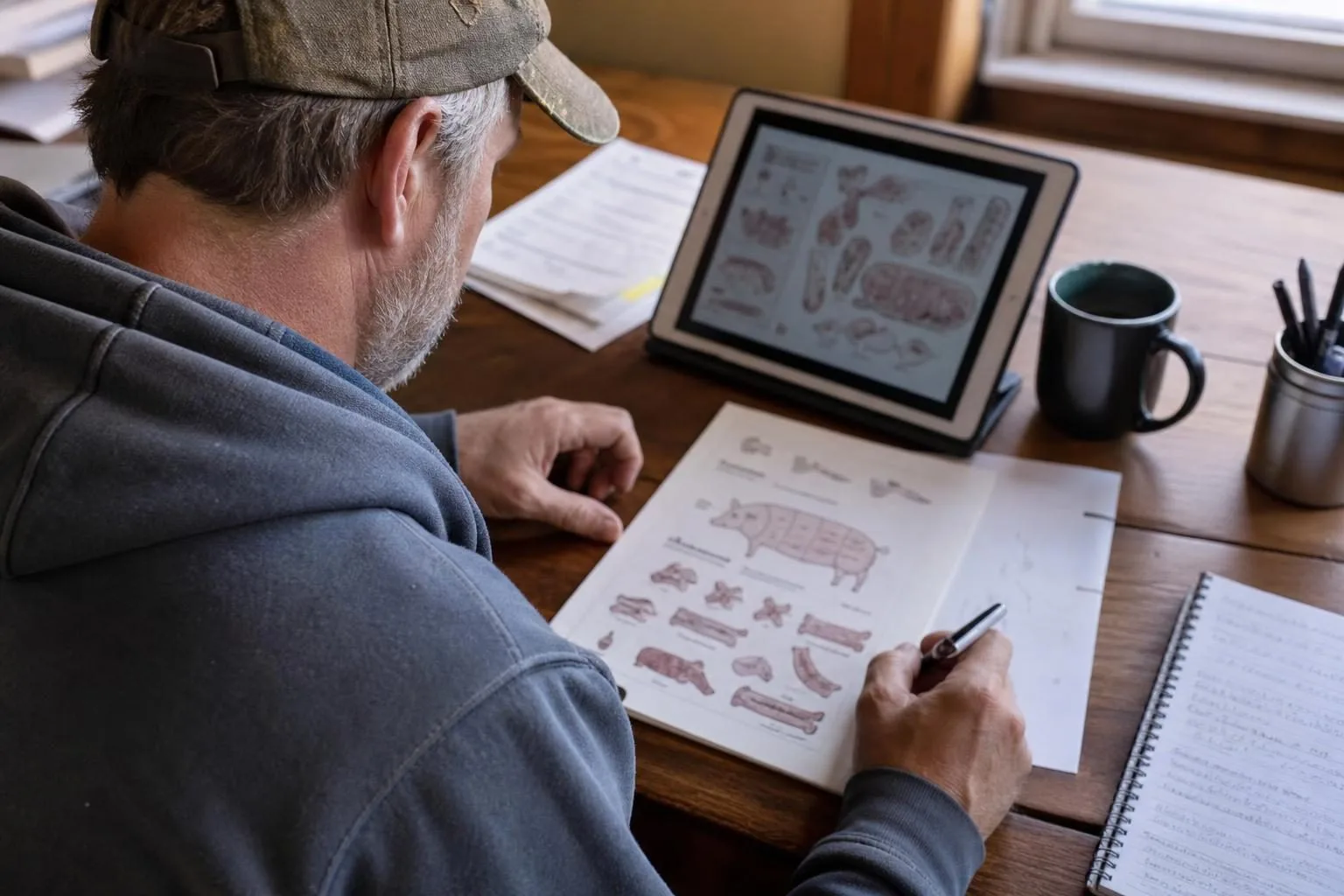
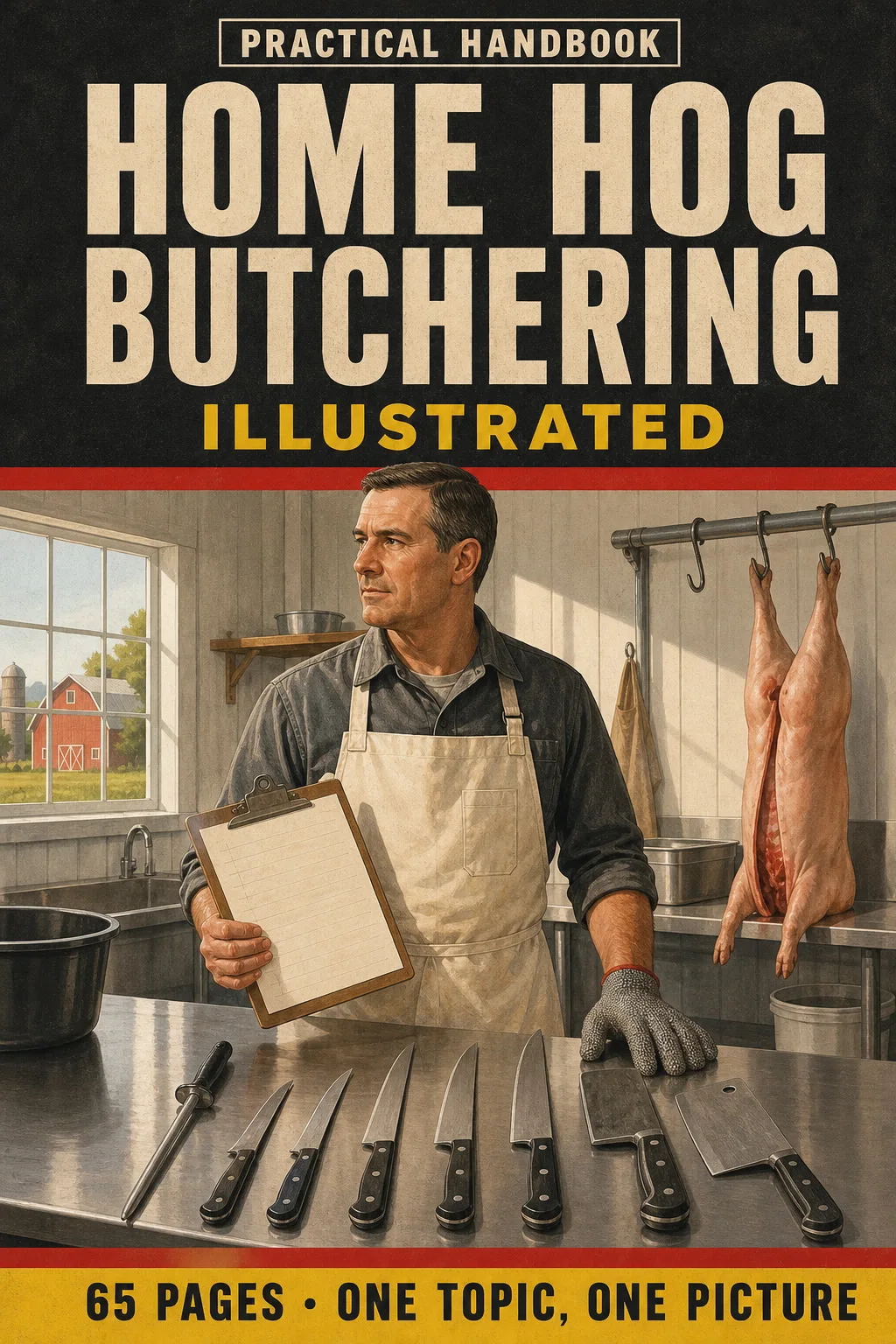
Hog Butchering at Home, Carcass to Freezer, in Drawings The Same Order Every Time

Chilling the carcass, splitting, the four primals, chops and roasts, bacon and ham, sausage in pounds, curing basics, wrapping and freezing. Each topic has its own page: first the drawing, then what you need to remember. 65 illustrated pages.

SHOW ME EVERY CUT, DRAWN

🔒 Secure checkout · PDF by email · 30-day guarantee

Every topic, its own pageEach cut drawn, with the explanation right beside it
65 illustrated pages9 parts, from planning the day to the printable whole hog map
Up-to-date sourcesTemperatures checked against USDA FSIS consumer guidance and the National Center for Home Food Preservation; confirm your state's rules locally
PDF by emailFormat

Look Inside the Book

Every page has one big drawing and a box with the temperatures, weights and steps you need to know:

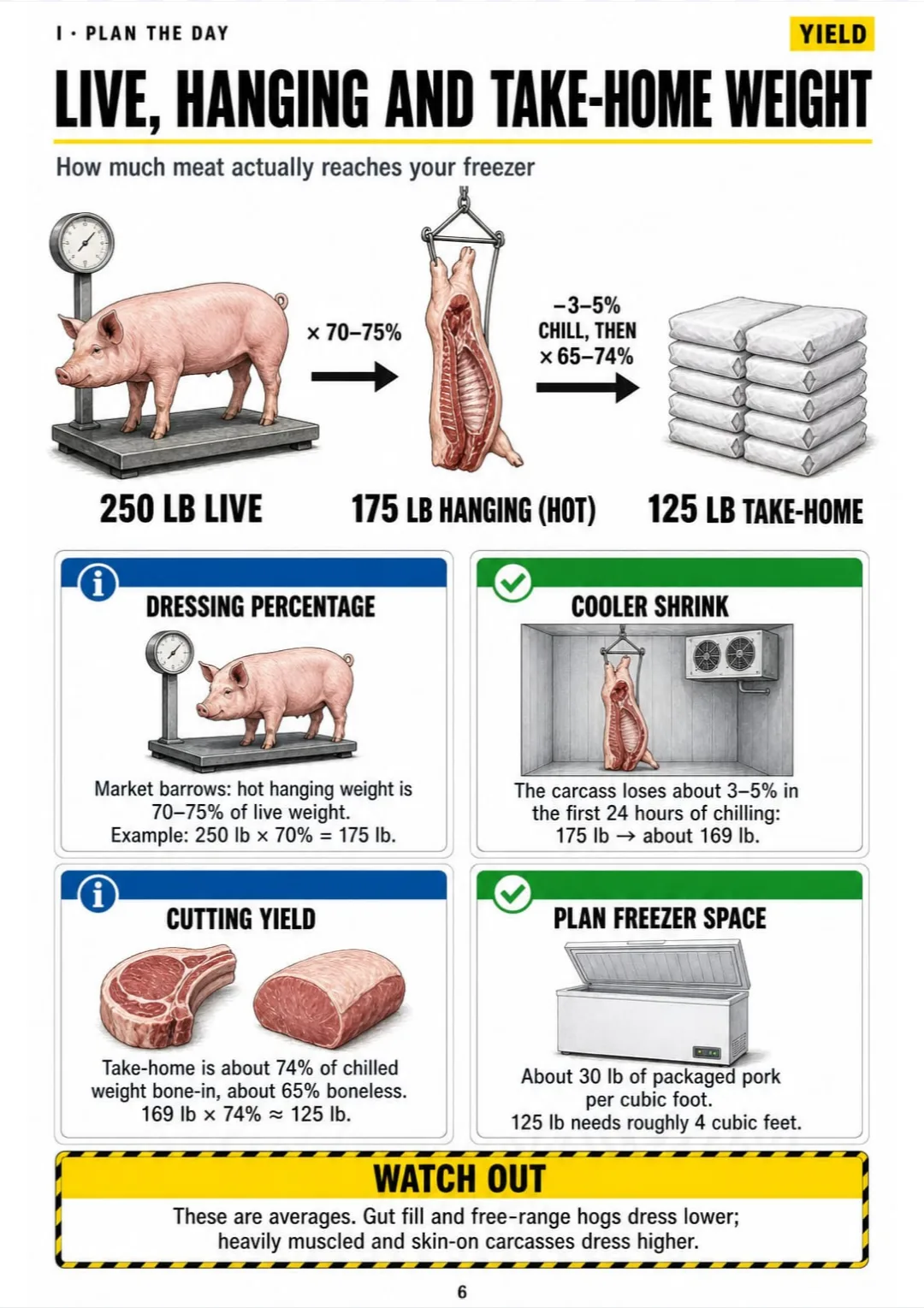
250 lb live → 175 lb hot → ~169 lb chilled → ~125 lb take-home
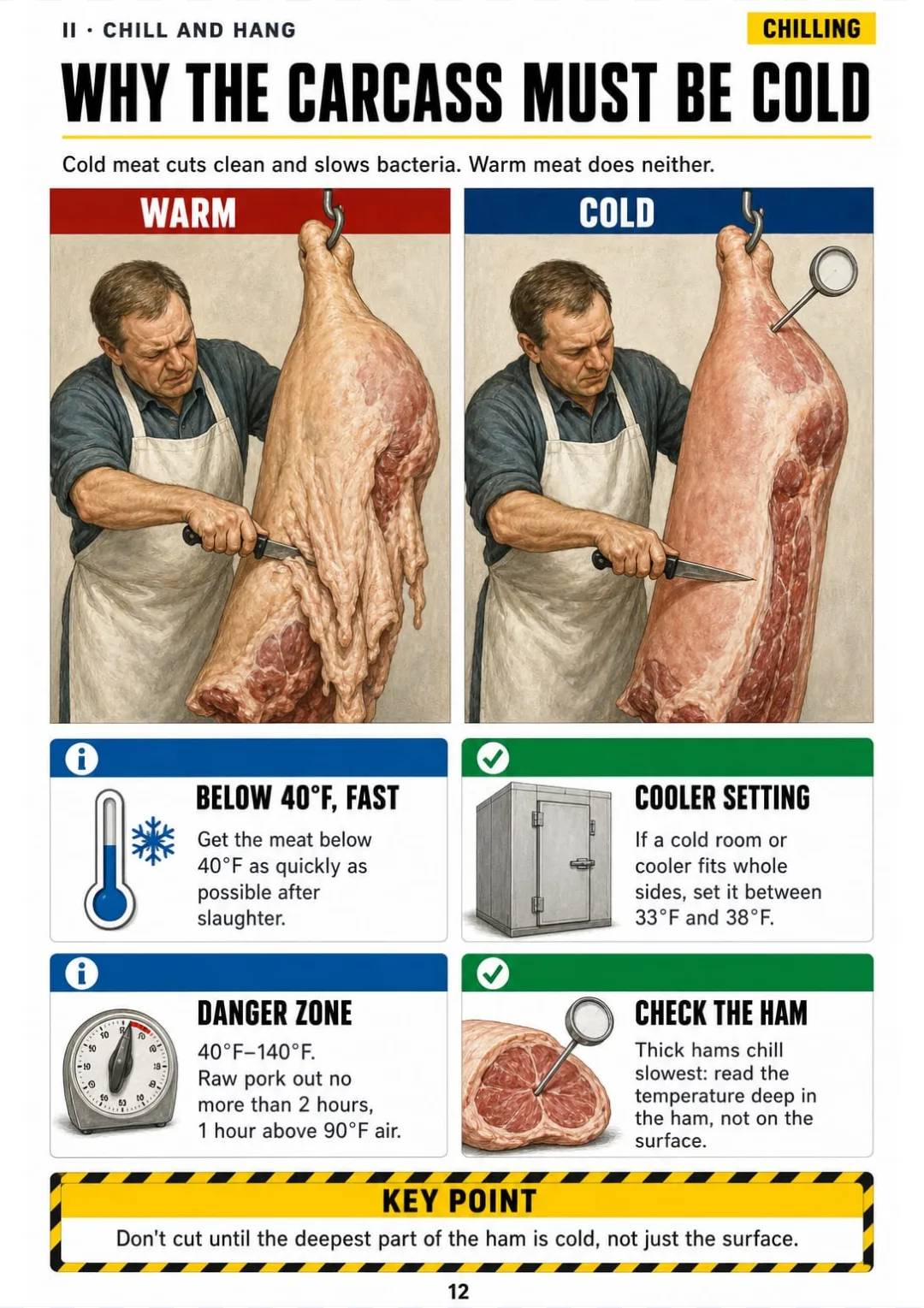
Below 40°F as fast as possible; cooler at 33–38°F; check deep in the ham.
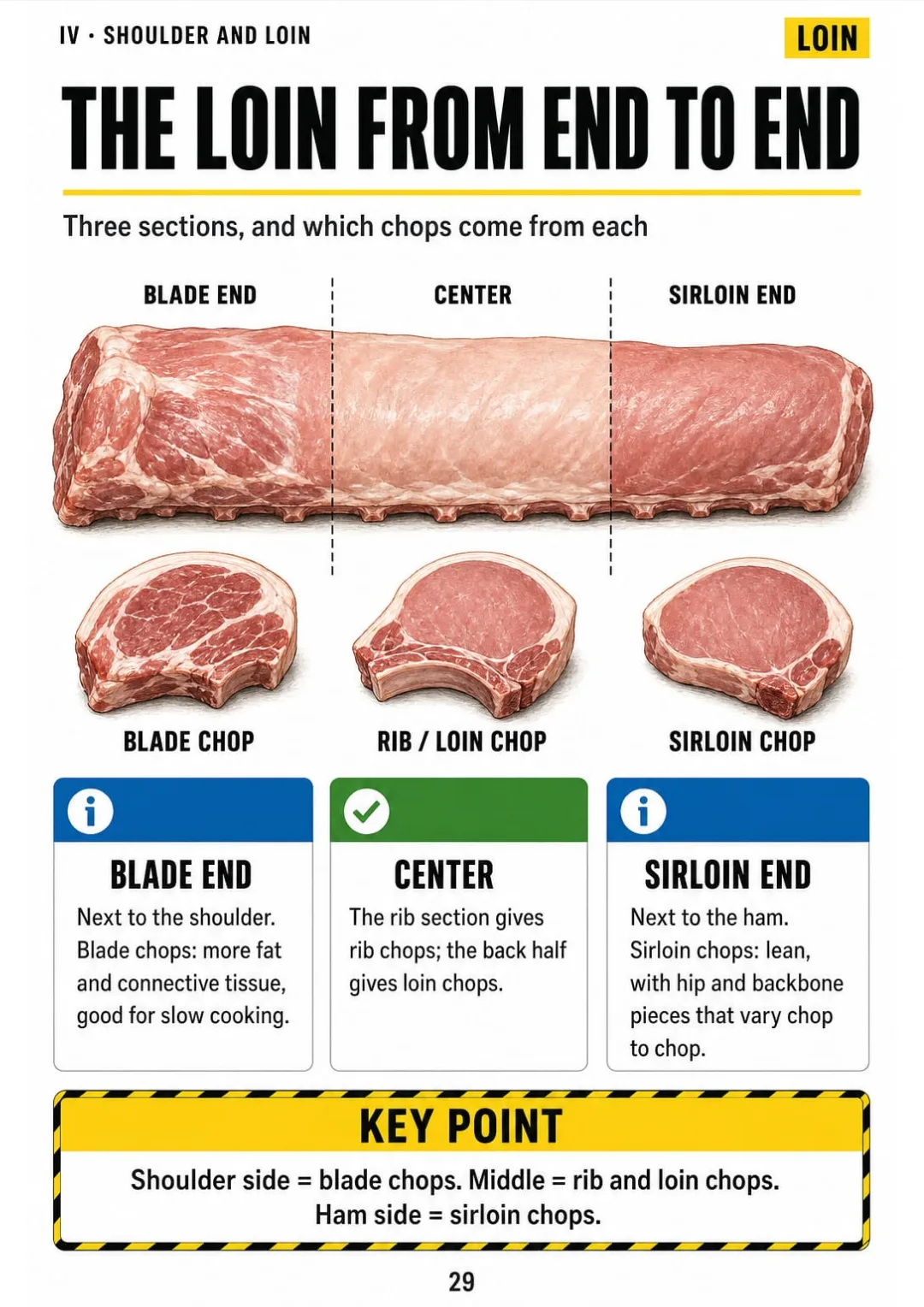
Blade end, center, sirloin end: the three loin sections and the chops each one gives.
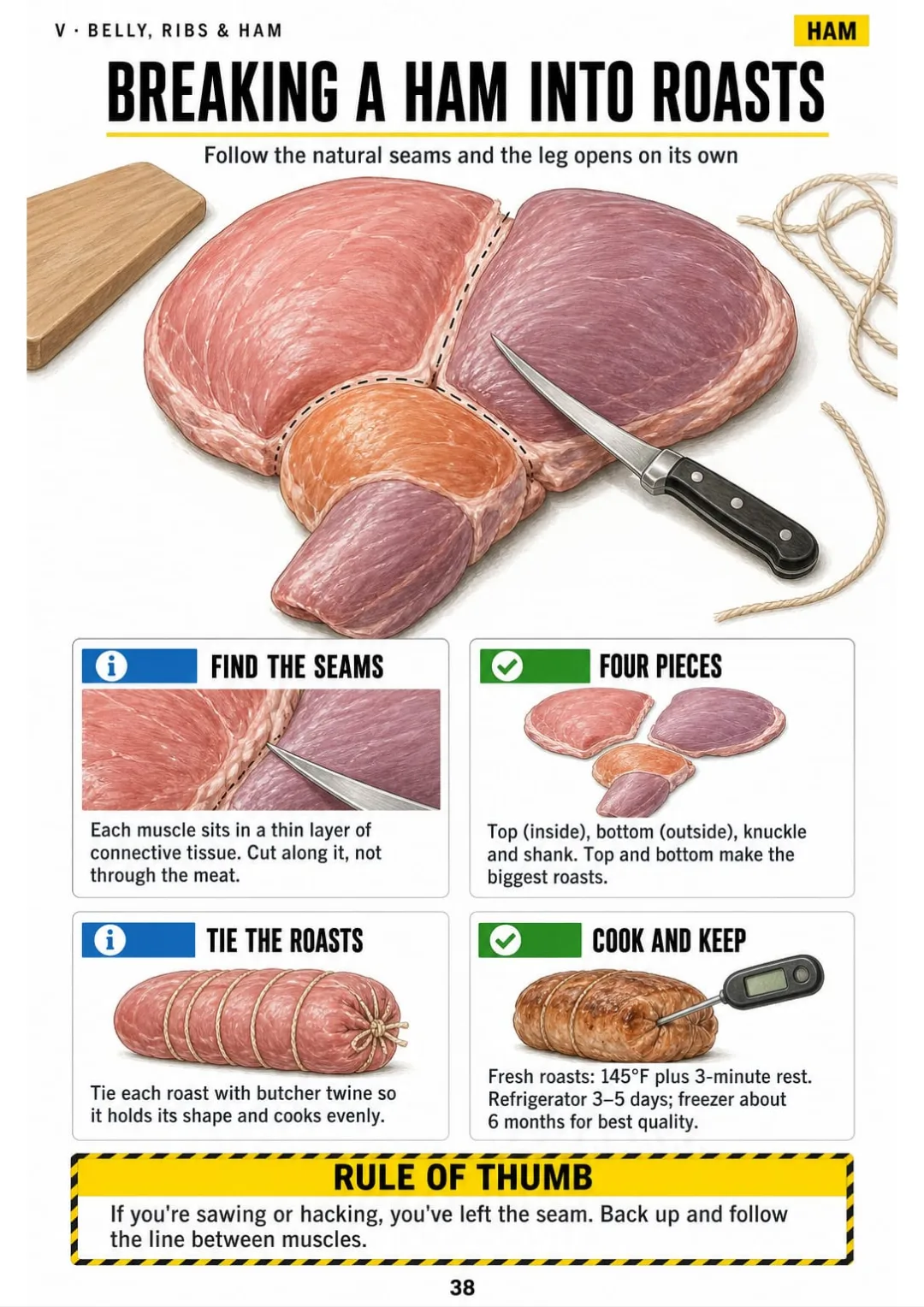
Seam the leg into top, bottom, knuckle and shank; fresh roasts cook to 145°F + 3-minute rest.
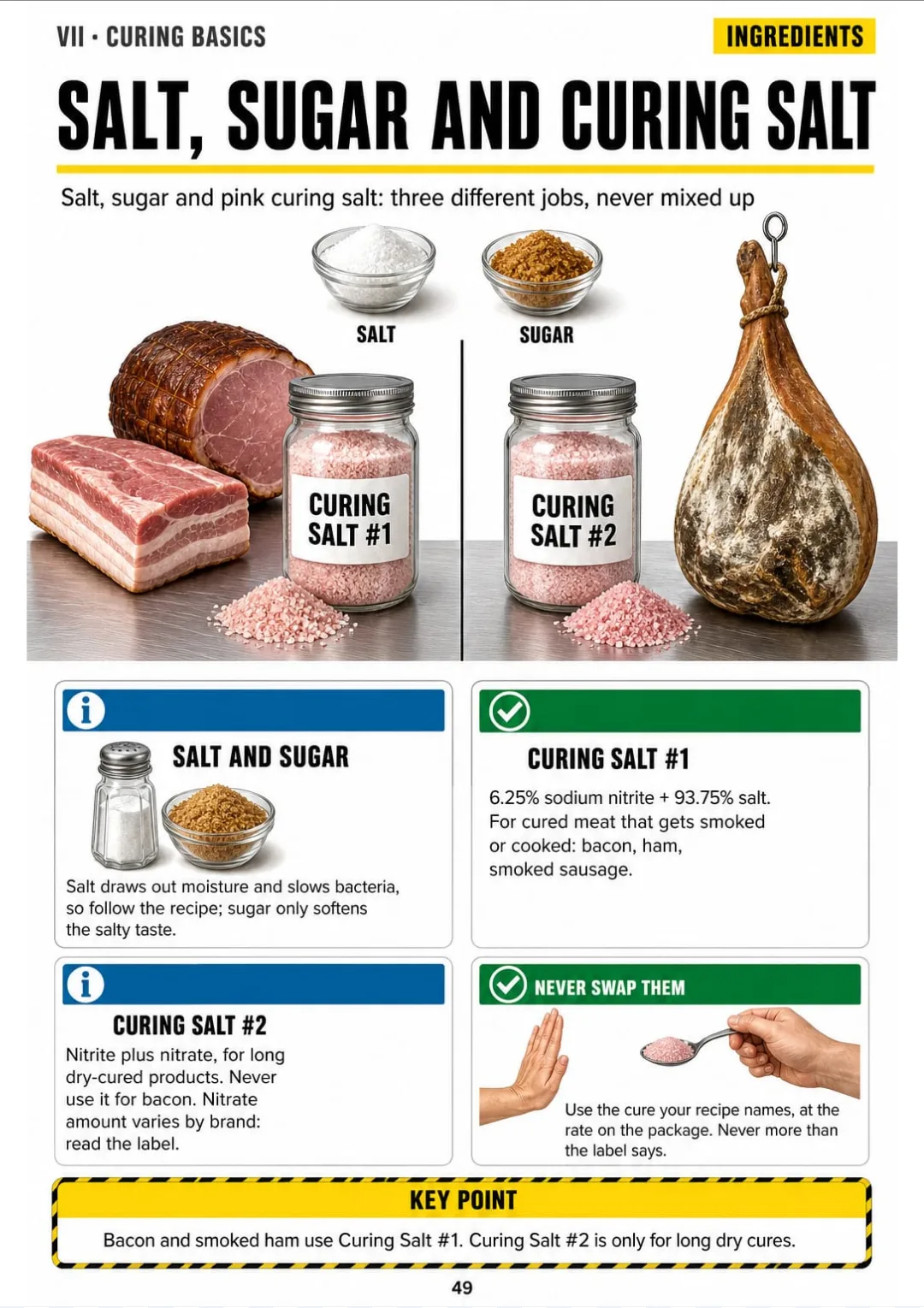
Curing Salt #1: 6.25% sodium nitrite, for bacon, ham and smoked sausage
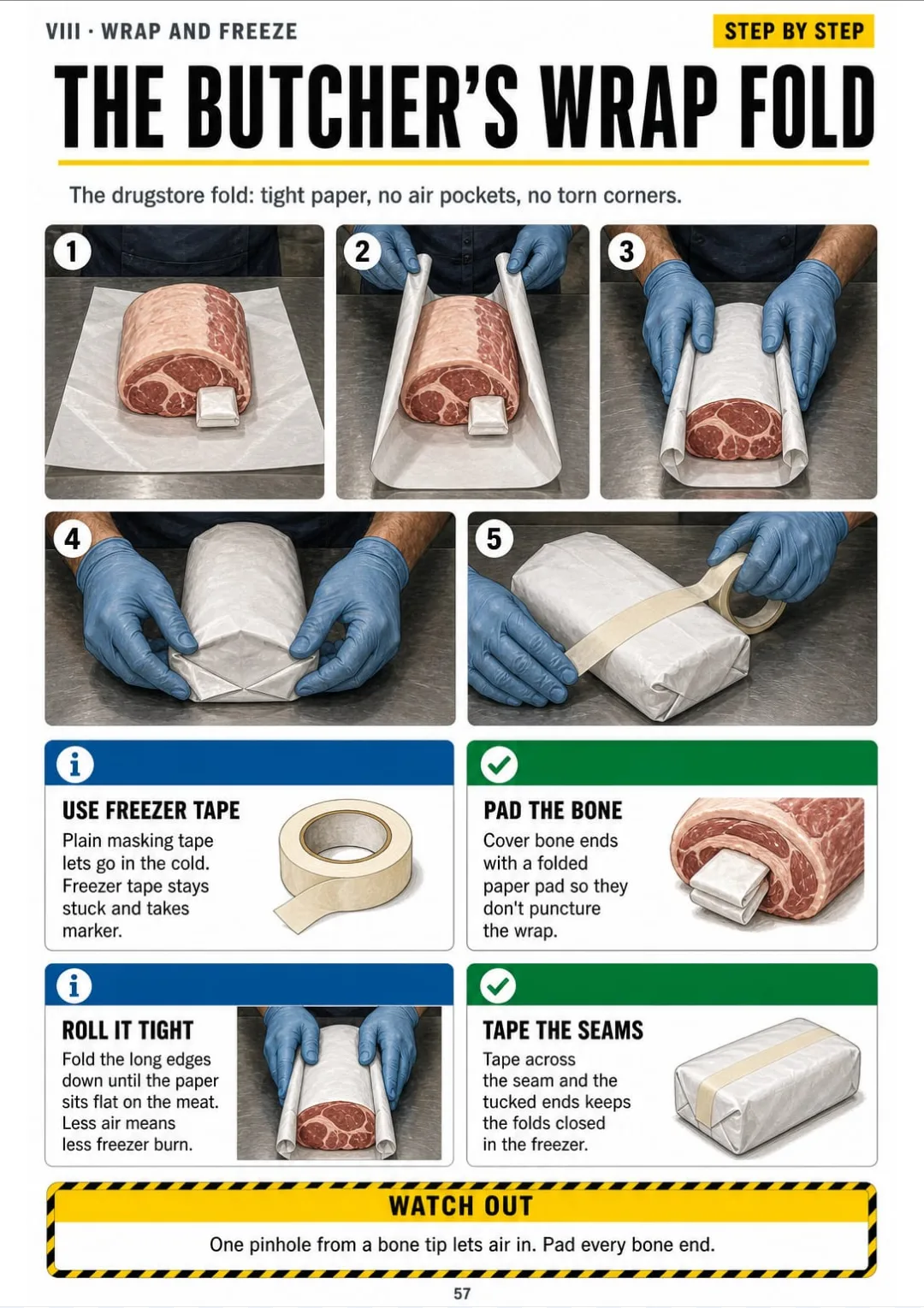
Center, fold long sides, roll down tight, tuck ends, tape. Pad bone ends first.
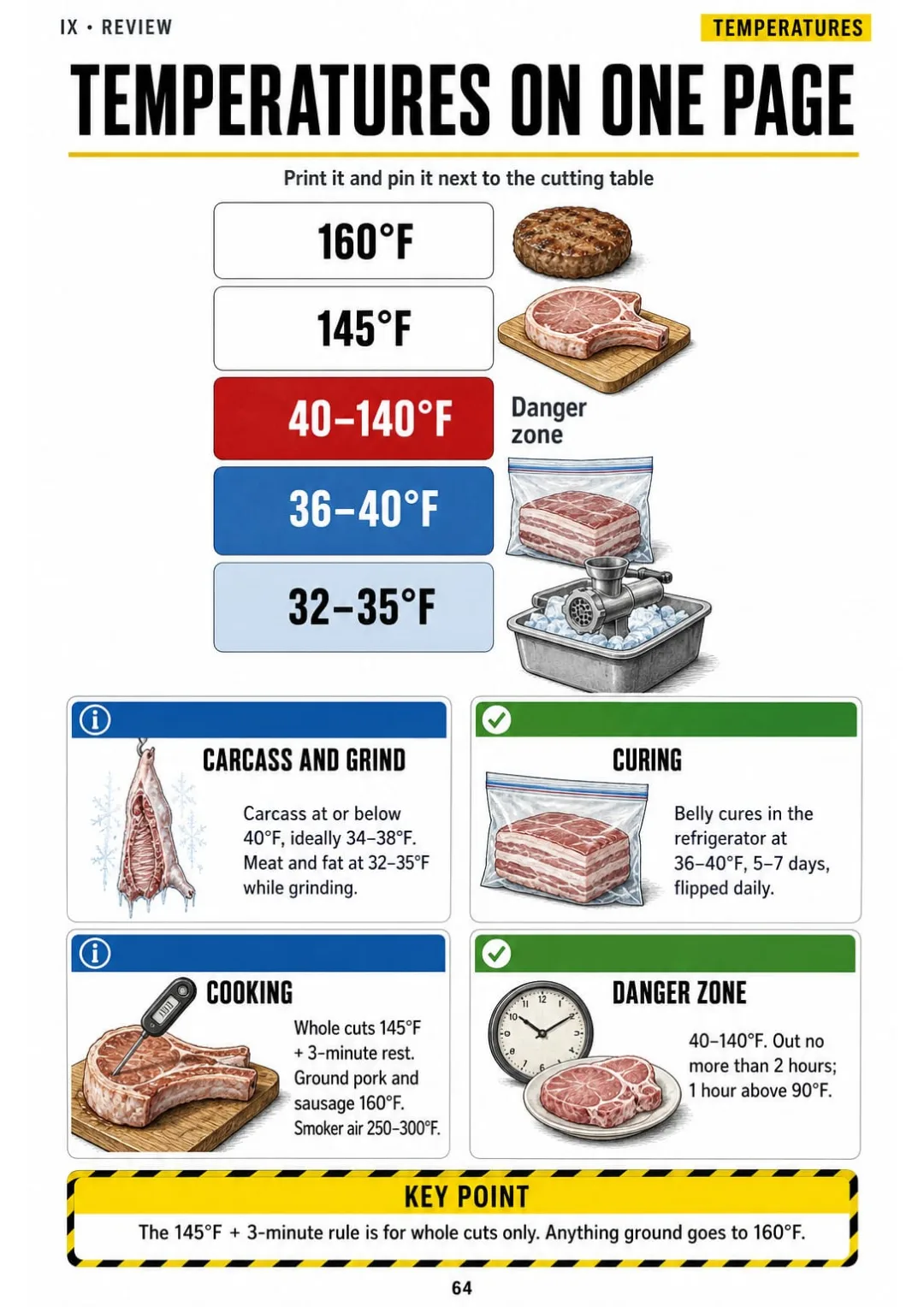
0°F freezer · below 40°F carcass · 32–35°F grind · 145°F + 3 min whole cuts · 160°F ground.
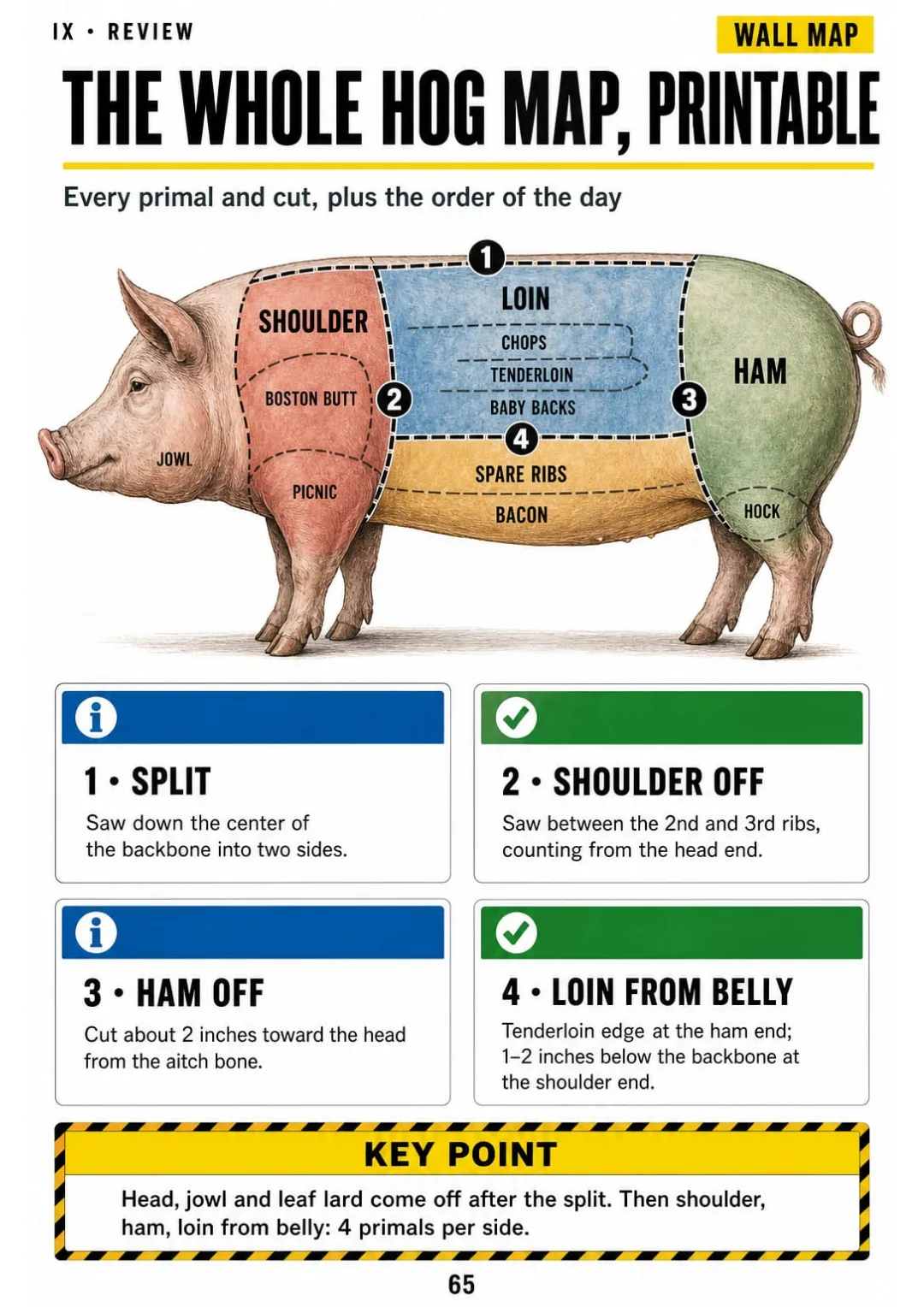
4 primals per side, every retail cut labeled, the day's 4 cuts numbered in order.

Swipe to see more →

These are real pages from the book. The table of contents is the full one: 9 parts and 61 topics.

It's Not You. It's How It Was Explained.

The loin is on the table, one long piece from shoulder to ham. You want chops, and you can't tell where one section ends and the next begins.

You've watched the videos: each one starts the loin somewhere else, and you can't pause with greasy hands. Nobody shows you where the knife goes, in one order.

Blade end, center, sirloin end: the three loin sections and the chops each one gives.

In this book the loin is one drawing, end to end: blade end, center and sirloin end, each with the chops it gives, and the cut lines marked between them.

Same with the chill, the ham roasts, curing salt and the butcher's wrap: each one has its own page.

You look at the page, make the cut and turn the page. No going back to the manual with greasy hands.

COMPARE FOR YOURSELF

The Same Topic, Two Ways to Learn It

THIS
  • The manual: line after line
  • Chilling explained only with words
  • You reach hog day still unsure
Following dressing, carcass temperature must be reduced promptly in order to limit microbial proliferation and to permit adequate firming of subcutaneous and intermuscular fat. Chilling should proceed until the internal temperature, measured at the deepest portion of the ham, falls below 40°F, with the cooler maintained between 33 and 38°F. Insufficient chilling results in soft fat, irregular cut surfaces and reduced storage life, whereas the rate of chilling must also be considered in relation to carcass size, ambient conditions and air circulation.
FOR THIS
  • The chill in one drawing
  • The temperatures in a box
  • You see it and you get it
Below 40°F as fast as possible; cooler at 33–38°F; check deep in the ham.
CONTENTS

Take a Look at the 9 Parts and 61 Topics

Plan the day, chill and hang, split into primals, shoulder and loin, belly, ribs and ham, fat and sausage, curing basics, wrap and freeze, and the review checklists: 65 pages, all illustrated

IPlan the Day · pp. 5-11
  1. The Whole Day on One Map
  2. Live, Hanging and Take-Home Weight
  3. Personal Use Only: Know Your State's Rules
  4. The Knife Roll: What You Actually Need
  5. Setting Up the Table and the Space
  6. Cleaning and Sanitizing Before You Start
  7. Your Cut Sheet Before the Knife
IIChill and Hang · pp. 12-17
  1. Why the Carcass Must Be Cold
  2. The Chill Timeline
  3. Chilling Without a Walk-In Cooler
  4. Where to Put the Thermometer
  5. Reading the Carcass Before Cutting
  6. Hanging Halves Safely
IIISplit and Break into Primals · pp. 18-25
  1. The Four Primals at a Glance
  2. Splitting Down the Backbone
  3. Removing the Head, Jowl and Leaf Lard
  4. Taking Off the Shoulder
  5. Taking Off the Ham
  6. Separating Loin from Belly
  7. Removing the Tenderloin First
  8. Weigh Each Primal
IVShoulder and Loin Cuts · pp. 26-33
  1. Boston Butt vs Picnic
  2. Boning Out a Shoulder
  3. Shoulder Steaks or Roasts
  4. The Loin from End to End
  5. Cutting Even Chops
  6. Bone-In or Boneless Loin
  7. Baby Back Ribs off the Loin
  8. Cooking Temperature Reminder for Fresh Pork
VBelly, Ribs and Ham · pp. 34-40
  1. Squaring the Belly for Bacon
  2. Removing Spare Ribs
  3. Skin On or Skin Off
  4. Fresh Ham or Cured Ham
  5. Breaking a Ham into Roasts
  6. Ham Steaks and Shanks
  7. Hocks, Feet and Bones
VIFat, Grind and Sausage · pp. 41-48
  1. Sorting the Trim
  2. Lean-to-Fat Ratio
  3. Salt and Seasoning in Pounds
  4. Keeping the Grind Cold
  5. Coarse Plate, Then Fine Plate
  6. Mixing and the Test Patty
  7. Bulk, Patties or Links
  8. Rendering Lard
VIICuring Basics · pp. 49-55
  1. Salt, Sugar and Curing Salt
  2. Measuring Curing Salt Safely
  3. Dry-Curing a Belly for Bacon
  4. Equilibrium Cure in Plain Numbers
  5. Brining a Ham
  6. Smoking and Cooking Cured Pork
  7. Trichinella and Freezing Pork
VIIIWrap, Label and Freeze · pp. 56-60
  1. Freezer Paper, Plastic or Vacuum Seal
  2. The Butcher's Wrap Fold
  3. Labels That Tell You Everything
  4. Freezing Fast at 0°F
  5. How Long Each Cut Keeps
IXReview and Checklists · pp. 61-65
  1. The Day-Before Checklist
  2. Common Mistakes: Before and After
  3. Fixing Uneven Cuts
  4. Temperatures on One Page
  5. The Whole Hog Map, Printable

One Page, One Topic, All Clear

Think of it this way:

It's hog day. The halves chilled overnight and you need to know if they're cold enough to start cutting.

You open the chilling page and see the carcass drawn with the thermometer deep in the ham: below 40°F, cooler at 33–38°F.

Curing Salt #1: 6.25% sodium nitrite, for bacon, ham and smoked sausage

Same with the four primals, the loin chops, squaring the belly, the lean-to-fat ratio and the butcher's wrap: each one on its own page.

Home Hog Butchering Illustrated is 9 parts and 61 topics, all drawn, and at the end a day-before checklist, the most common mistakes before and after, every temperature on one page and a printable whole hog map.
What you see drawn, you don't have to memorize.

What's Inside Home Hog Butchering Illustrated:

Ipp. 5-11

Plan the Day

The whole day on one map, live to take-home weight, personal-use rules, the knives you need, table setup, sanitizing and your cut sheet.

IIpp. 12-17

Chill and Hang

Why the carcass must be cold, the chill timeline, chilling without a walk-in, where the thermometer goes, and hanging halves safely.

IIIpp. 18-25

Split and Break into Primals

The four primals, splitting the backbone, head, jowl and leaf lard, shoulder, ham, loin from belly, the tenderloin first, and weighing each primal.

IVpp. 26-33

Shoulder and Loin Cuts

Boston butt vs picnic, boning a shoulder, steaks or roasts, the loin end to end, even chops, bone-in or boneless, baby backs and the cooking temperature.

Vpp. 34-40

Belly, Ribs and Ham

Squaring the belly for bacon, spare ribs, skin on or off, fresh or cured ham, ham roasts, steaks and shanks, hocks, feet and bones.

VIpp. 41-48

Fat, Grind and Sausage

Sorting the trim, lean-to-fat ratio, salt and seasoning in pounds, keeping the grind cold, coarse then fine plate, the test patty, links and rendering lard.

VIIpp. 49-55

Curing Basics

Salt, sugar and curing salt, measuring curing salt safely, dry-cured bacon, equilibrium cure, brining a ham, smoking and cooking, trichinella and freezing.

VIIIpp. 56-60

Wrap, Label and Freeze

Freezer paper, plastic or vacuum seal, the butcher's wrap fold, labels that say it all, freezing fast at 0°F and how long each cut keeps.

IXpp. 61-65

Review and Checklists

The day-before checklist, common mistakes before and after, fixing uneven cuts, every temperature on one page and the printable whole hog map.

At the end of the book: A day-before checklist, the most common mistakes before and after, every temperature on one page and a printable whole hog map.
Plus: 2 Free Books

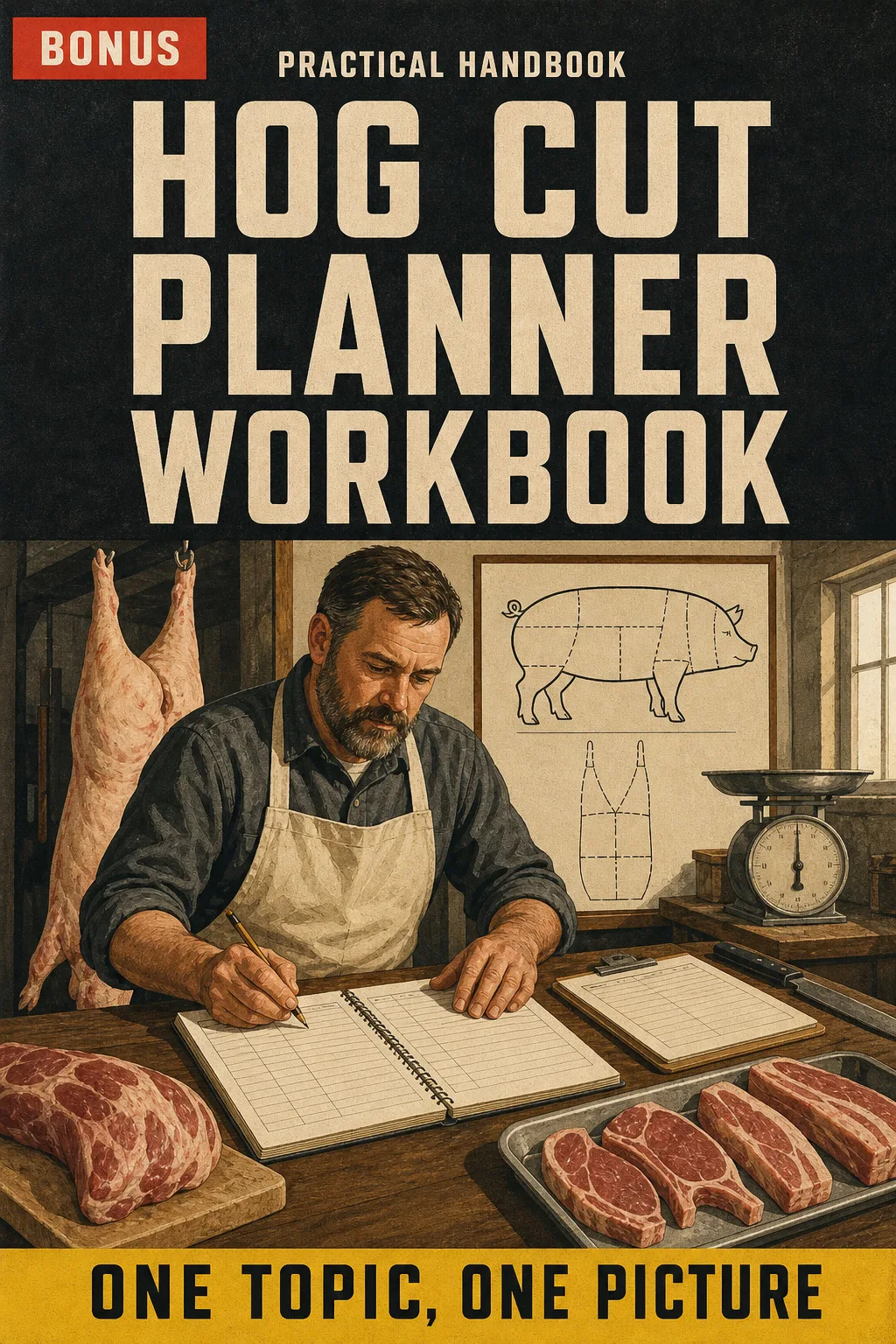
Hog Cut Planner Workbook

BONUS 1: «Hog Cut Planner Workbook»

Value on its own: US$ 17.90

Practice before the big day: fill in your own cut sheet, decide chops or roasts from each primal, and work out sausage batches in pounds so nothing gets decided with a knife in your hand.

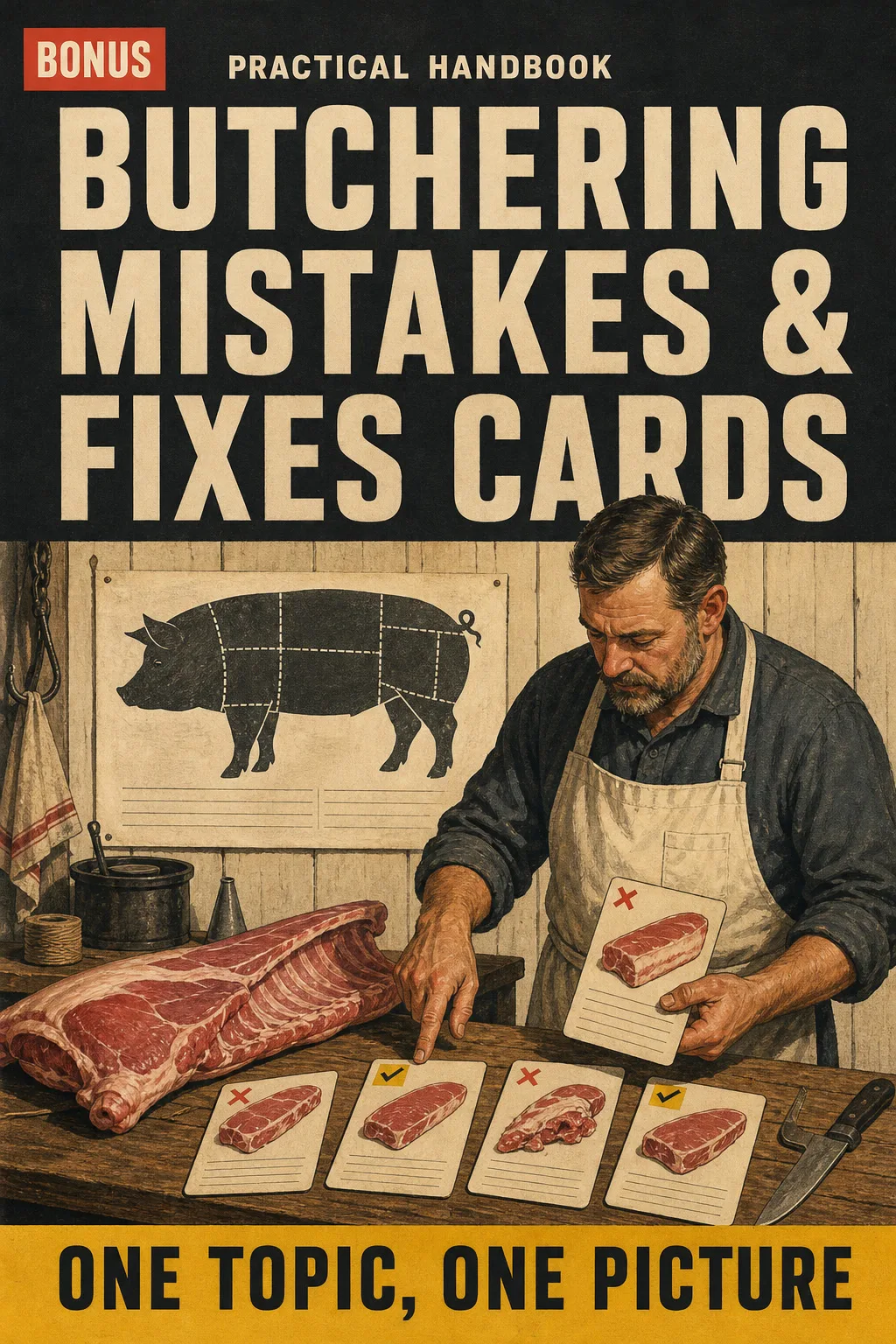
Butchering Mistakes & Fixes Cards

BONUS 2: «Butchering Mistakes & Fixes Cards»

Value on its own: US$ 14.90

Printable cards with the most common mistakes and the fix for each one, drawn before and after, to review the night before and pin up next to the table.

Home Hog Butchering Illustrated with 2 Free Books

  • Home Hog Butchering Illustrated: 65 illustrated pagesUS$ 63
  • BONUS 1: Hog Cut Planner WorkbookUS$ 17.90
  • BONUS 2: Butchering Mistakes & Fixes CardsUS$ 14.90
  • High-resolution PDF to printIncluded
Total value US$ 95.80
YOUR PRICE:
US$ 27
You save US$ 68.80
YES, I WANT HOME HOG BUTCHERING ILLUSTRATED FOR US$ 27

📄 This is a digital PDF book sent to your email: nothing is printed or shipped.

Secure purchaseEncrypted payment30-day guarantee

PDF by email: We email you Home Hog Butchering Illustrated as a PDF, together with the two free books. It's a single payment: no installments, no extra charges.

Who This Book Is For

Your first hog is coming up

Your first hog is coming up

The whole day in one order, drawn page by page, so you know where to start before the carcass is even hanging.

Hog day is on the calendar

Hog day is on the calendar

Fill in your cut sheet, check the chill and the temperatures, and print the pages you'll want next to the table.

You've butchered before

You've butchered before

Put order into what you already do: even chops, a square belly for bacon, and freezer packs labeled with cut, weight and date.

Everything You Get Today

US$ 95.80US$ 27
YES, I WANT HOME HOG BUTCHERING ILLUSTRATED FOR US$ 27

📄 This is a digital PDF book sent to your email: nothing is printed or shipped.

30DAYS
GUARANTEE

30-Day Guarantee

Try Home Hog Butchering Illustrated for 30 days, bonus books included.

We refund everything if the file won't open, if the book isn't what you see here, if you were charged twice or if the email doesn't arrive. Just email us.

You pay once. No subscriptions.

Frequently Asked Questions

Is it for me if this is my first hog?

Yes. It follows the day in one order, from the chilled carcass to the freezer. If you've done it before, it helps you get even chops and a square belly.

Where does the content come from?

Temperatures, storage and curing follow USDA FSIS consumer guidance and the National Center for Home Food Preservation. Personal-use rules change from state to state: the book tells you what to check, and you confirm it with your state department of agriculture before hog day.

Is this official material?

No. It's an independent illustrated book, not affiliated with or endorsed by any agency. Check temperatures and curing amounts against the current official source.

Does it replace hands-on training or a licensed processor?

No. It's study and reference material for home butchering for personal use only. Meat processed at home is not for sale: check the federal rules at fsis.usda.gov and your state's rules with your state agency.

There are free videos on YouTube. Why this?

Videos are great to watch the night before. On hog day your hands are full: here it's one fixed order, one topic per page, printed and next to the table. The workbook and cut sheets are written for this book, so you plan your hog before the day.

When and how do I get it?

The book and the 2 bonus books come as PDFs by email, to the address you enter at checkout.

Do I have to pay every month?

No. It's a one-time payment.

Can I have it on paper?

Yes. It's a printable PDF: print the whole book or just the pages you want next to the table.

How does the refund work?

You have 30 days. We refund everything if the file won't open, if the book isn't what you see on this page, if you were charged twice or if the email doesn't arrive: just email us.

Before You Close This Page

No more rewatching videos that each cut it differently.

The loin, the ham, the wrap: you see it drawn and go.

You reach hog day knowing where every cut is.

Drawings make studying faster.

The book is right below.

One-time payment: US$ 27 · Guarantee: 30 days · PDF by email

YES, I WANT HOME HOG BUTCHERING ILLUSTRATED FOR US$ 27

📄 This is a digital PDF book sent to your email: nothing is printed or shipped.